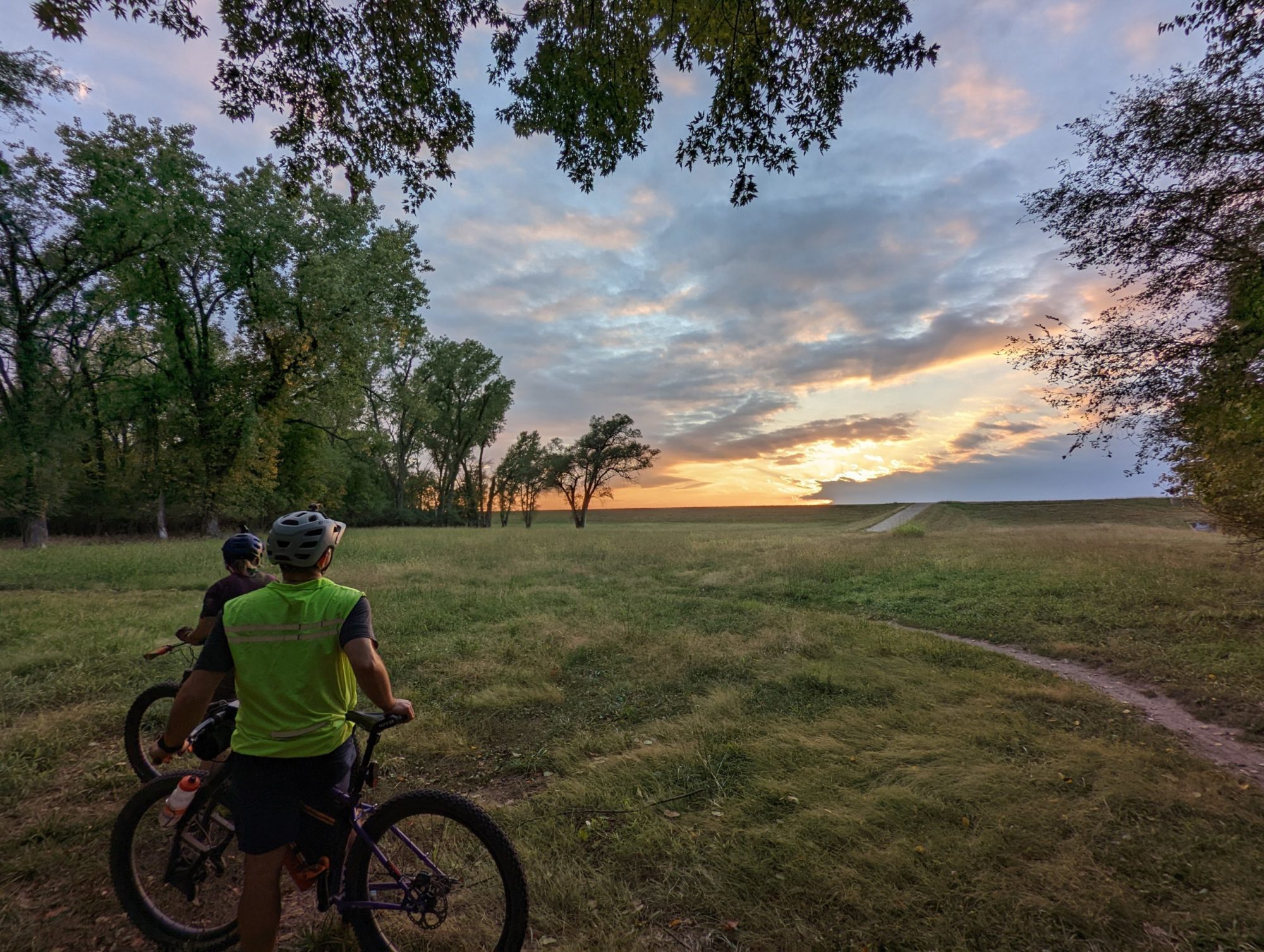

During late fall, winter warm spells, and early spring, our trails are often affected by a process called freeze–thaw cycling. This happens when temperatures move back and forth across the freezing point, causing moisture in the soil to repeatedly freeze and melt. When water freezes, it expands by about 9%, pushing soil particles apart and lifting the trail surface in a process known as frost heave. As temperatures rise, that ice melts, leaving behind voids and a soil structure that is loose, saturated, and mechanically weak.
From a geotechnical standpoint, thawed soil has very little load-bearing capacity. Even if the surface appears dry or firm, the layers beneath are often soft and plastic. The trail hasn’t “set up” yet—it needs time either to fully refreeze solid or to dry and drain before it can support traffic again.
This is where riders come in, and it’s not about blame—it’s about physics. Tires and footprints press into that softened soil, squeezing water out and displacing material sideways. That creates ruts, divots, and depressions that don’t bounce back. Once temperatures drop again or the trail finally dries, those marks harden in place. What started as one well-intentioned ride can turn into season-long roughness, poor drainage, and erosion problems.
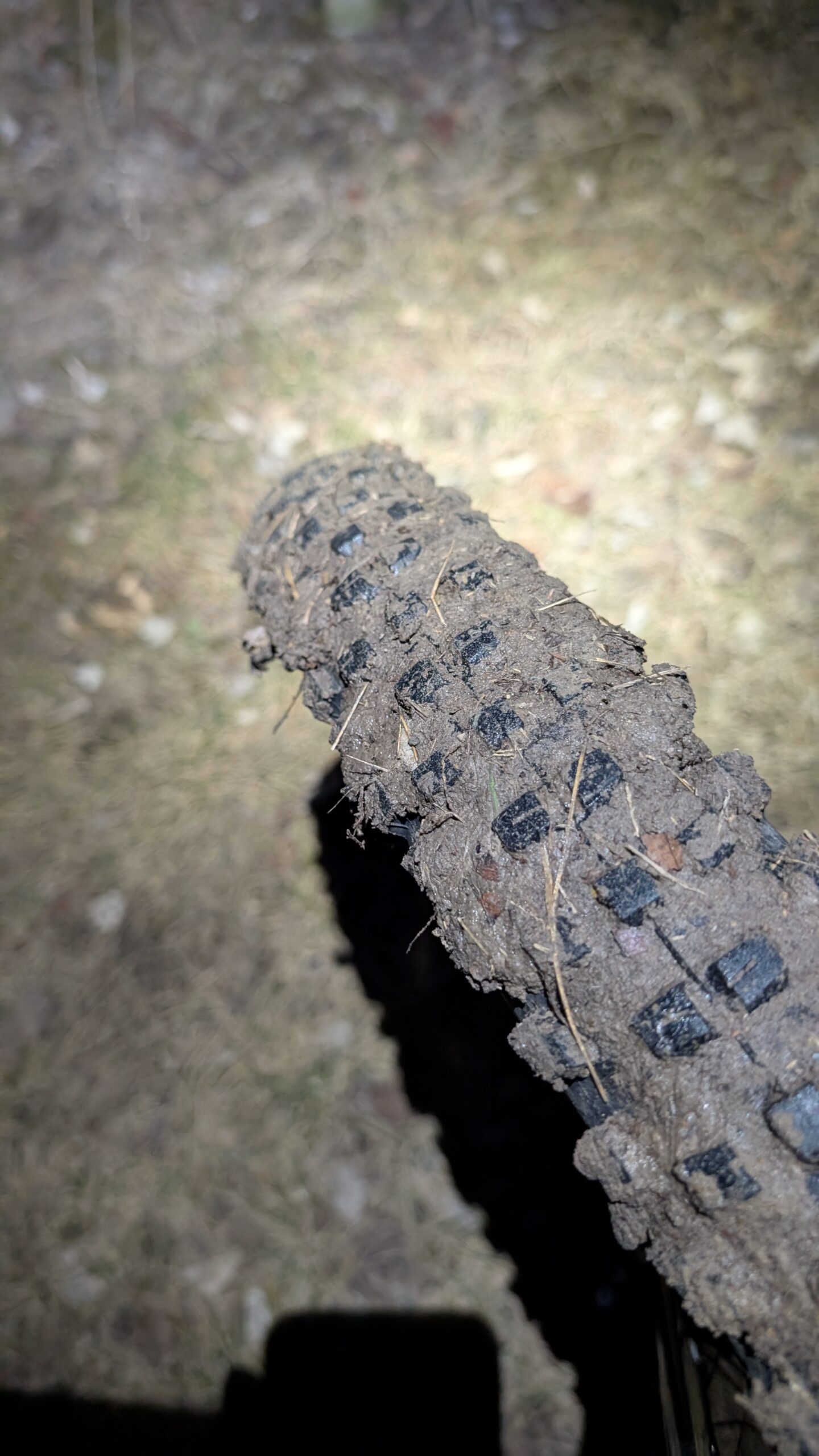
In the Lawrence area, freeze–thaw damage is especially common because of our climate and soil. Winter temperatures frequently swing above and below freezing, sometimes multiple times in a single week, which keeps trails in a prolonged unstable state. Many local soils are clay-rich and slow to drain, meaning they hold moisture longer and take more time to regain strength after a thaw. South-facing sections may soften early in the day while shaded or low-lying areas remain frozen underneath, creating uneven conditions that are particularly vulnerable to damage. This makes patience critical during late winter and early spring, even when parts of the trail seem rideable.
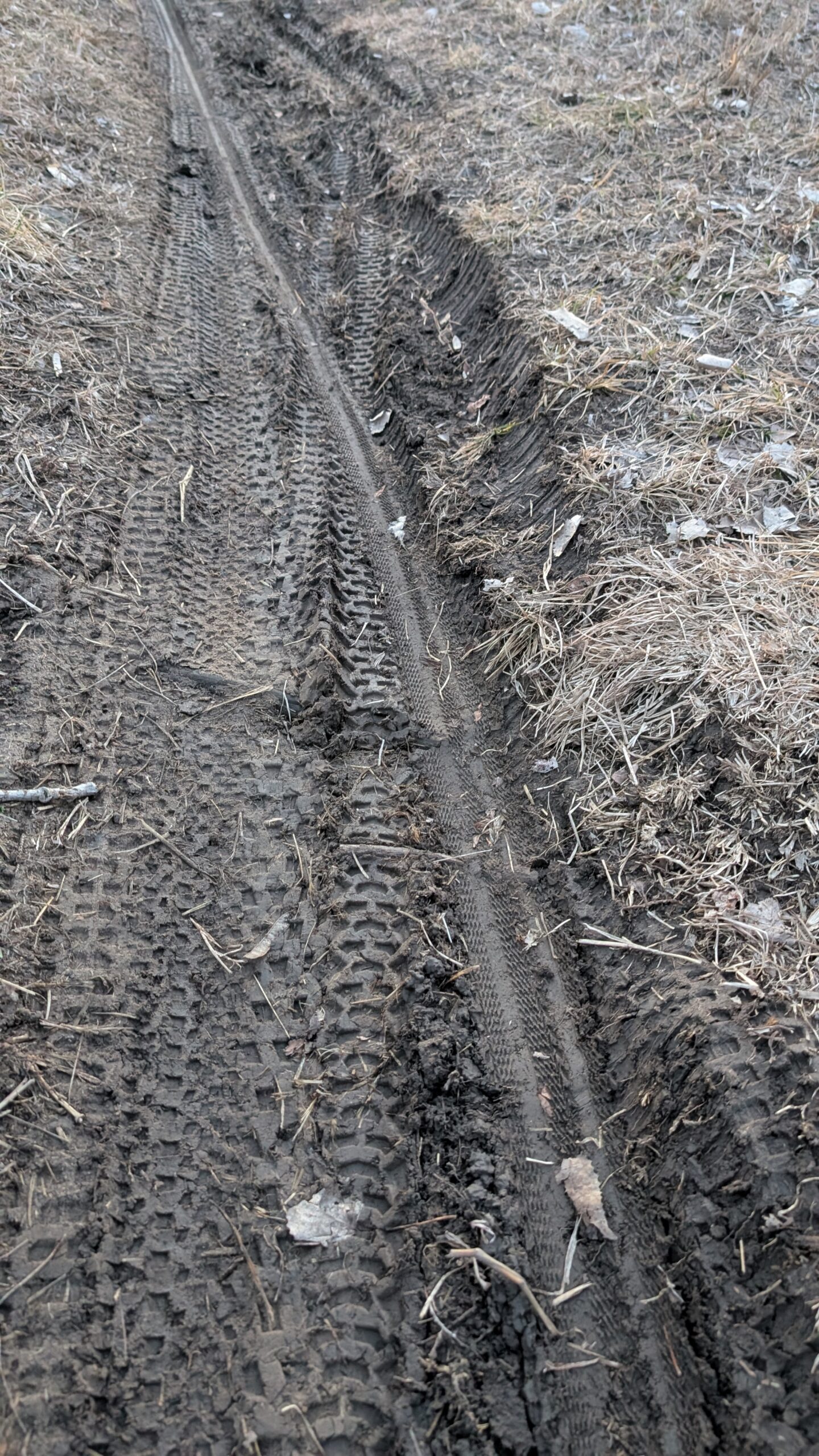
Frozen is OK, thawed is not
A simple rule of thumb helps protect the trails: frozen is OK, thawed is not. When the ground is frozen solid—usually early in the morning or during sustained cold—it can support riders without damage. But once the trail begins to thaw, even slightly, it quickly loses strength. If you’re leaving tire tracks, footprints, or kicking up mud, the trail is telling you it’s not ready yet.
Waiting a little longer makes a big difference. Giving trails time to fully refreeze or fully dry keeps them smoother, safer, and more fun for everyone—and saves countless volunteer hours spent fixing preventable damage.
Following the Urban Trail Company on the Rainout Line mobile app, or on our website at this page: https://www.lawrencemountainbikeclub.org/status/ and on the home page is a good way to tell if the trail is ready to ride.
Technical content generated with the assistance of Chat GPT.